Tom Seaver
The Andy Warhol DiariesTom Seaver appears in Andy Warhol’s diary through a single, sharply observed portrait session in July 1977. As a baseball player invited to pose for the Athletes portrait series, he became both the subject of Warhol’s candid appraisal and a participant in the deliberate construction of a public image. The session also caught a change in his relation to the New York Mets: after being traded, he no longer felt loyal to the team, although he had recently bought a house in Connecticut.
Identity and Background
On July 20, 1977, Seaver came to pose for an Athletes portrait, accompanied in the day’s account by Richard Weisman, who arrived in a limousine. Warhol described Seaver as adorable and regarded his physique as especially suited to an athletic portrait, observing that athletes seemed to have fat in the right places and youth in the right places. The entry presents Seaver not through a career history or a game, but through the photographer’s attention to his appearance and the choices made in front of the camera.
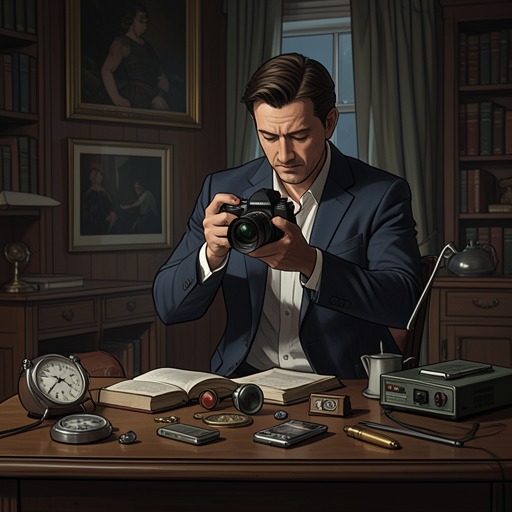
The sitting belonged to a wider period in which portraits were an important part of Warhol’s work. His usual method began with roughly sixty Polaroid photographs taken with a Polaroid Big Shot camera; he selected images for enlargement and silkscreening, and the final alignment of printed detail with painted color could give portraits their characteristic shifting appearance. This broader process helps explain why a pose, a uniform, and the camera’s view mattered in Seaver’s session, though the diary does not specify which photographs or final image Warhol chose from it.
The Portrait Session
The photographer, whom Warhol called Mr. Johnson, wanted Seaver to wear a New York Mets cap. He also proposed a deliberately divided look: a Cincinnati uniform paired with the Mets hat. Seaver refused that combination. The detail makes the sitting more than a routine exercise in likeness-making: the photographer sought to stage a visual contradiction, while Seaver declined to embody it for the camera.
Warhol’s account dwells on how differently Seaver’s body registered from different angles. He used ten rolls of film because, as he put it, Seaver was very hard to photograph. From the front, his neck looked skinny; from the side, it seemed three feet wide. His chest appeared huge head-on and almost absent in profile, while his hands could look tiny or enormous. Warhol compared these shifting proportions to a rubber man. The portrait session thus records not a stable image of Seaver but the practical difficulty of making one: each change of angle seemed to alter the body being photographed.
The Mets and the Trade
The rejected half-and-half uniform acquired a personal context in Warhol’s notes. Seaver’s wife, Nancy, was calling, and Warhol remarked that Seaver hated the Mets now. He had recently bought a new house in Connecticut, only to be traded afterward. The juxtaposition gives the session a pointed tension: the Mets cap remained useful to the photographer as a recognizable emblem, but the trade had changed what that emblem meant to its subject.
Seaver’s refusal to wear the proposed combination is the clearest action the diary records from him. The entry does not explain his reasons or describe what he thought of the eventual portrait. It does, however, preserve the difference between the image Warhol’s team wanted to arrange and the allegiance Seaver still appeared willing to perform. In this brief encounter, the athlete is not simply a famous face available for reproduction; he resists one of the picture’s intended signs, while Warhol’s account captures how fame, team identity, and photographic appearance could come apart.